A Beginner’s Guide to Cask Carbonation
At the bar I work at there are twenty-two lines. Three are for cider, one is for wine, sixteen are for kegged beer and two are for cask. The cask lines sit separately from the rest, they look different from the other lines and are interacted with differently as a result. Carbonation is the cause of this difference in handling and aesthetics. But before we get into all that, what, exactly, is carbonation?
Illustrations by David Bailey

- What do we mean by carbonation?
- Why is carbonation important in beer?
- What does this mean for cask beer?
- What are sparklers?
- How does carbonation affect those who drink cask?
- How does carbonation affect those who serve cask?
-
What do we mean by carbonation?
Carbonation is the term used to describe the presence of carbon dioxide gas within a liquid. Carbon dioxide will have dissolved in a liquid and remained there under pressure and manifests in a multitude of ways once that pressure is released: fizz, foam, froth, bubbles. A movement is present in carbonated liquid that is not found in a still liquid and this sparkle is said to enhance the feel and flavour of the drinks we consume. This is all to say that fizziness equals fun. But it is also a necessary requirement for a lot of the drinks we consume, including our beer.
-
Why is carbonation important in beer?
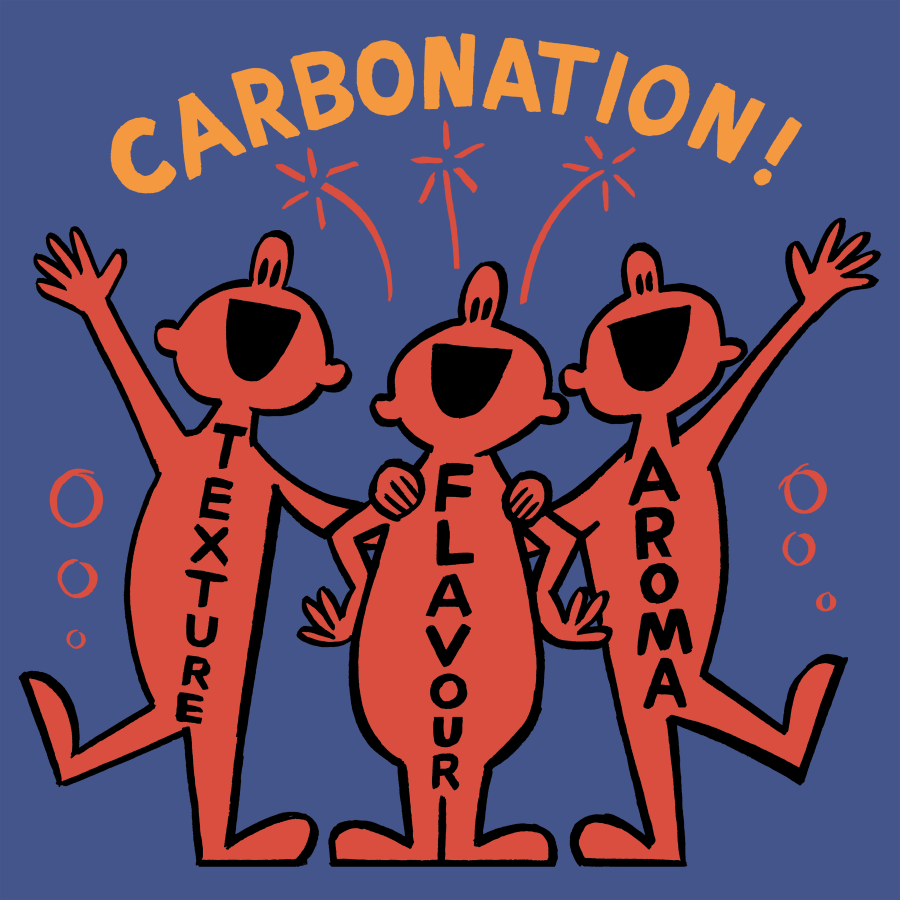
Carbonation is a naturally occurring presence in beer, as it’s a byproduct of the fermentation it goes under. Yeast consumes sugar and produces alcohol and carbon dioxide as it does so. This carbon dioxide can dissolve into the beer causing carbonated bubbles that will add texture to the drink, and will carry the flavour and aroma compounds of the beer as they move. Although this carbonation occurs naturally it can be controlled by the brewer and this is especially important when it comes to cask beer, which is served as a living, fermenting beer.
-
What does this mean for cask beer?
Continuing fermentation, or cask conditioning as it is often referred to, is a vital contributing factor to the pints of cask we order at the bar. The condition of a cask beer can refer to the concentration of carbon dioxide in the finished pint once it has been poured. Casks will arrive at a pub still undergoing this continuous, secondary fermentation and it’s vital that those in charge of the cellar understand the time and conditions the cask beer needs so it can pour at its best. You may have noticed on your drinking adventures that a well poured pint of cask beer will pour softer, with larger bubbles and perhaps ata slightly warmer temperature than the cold and force carbonated pint of kegged beer your friend has ordered. This is mainly down to the brewing methods and cellar management of the beer but can also be assisted by a little something called a sparkler.
-
What are sparklers?
A sparkler is a small, plastic nozzle that can get screwed onto the end of a beer tap. Both the cask lines at my place of work have sparklers and they work to force the beer through lots of tiny holes as the bartender pulls the beer from the cask. This adds air to the beer as it travels through the sparkler and encourages some of the bitter elements from the beer to reside into the head of the pint alongside the carbon dioxide. Sparklers can be fitted very tightly or applied loosely and the difference in tension will affect the feel of the finished beer. The sparklers we use in the bar will depend on what casks we have pouring and the effect we want the final, poured beer to have. Which is why it’s really important the bar team knows their stuff.
-
How does carbonation affect those who drink cask?
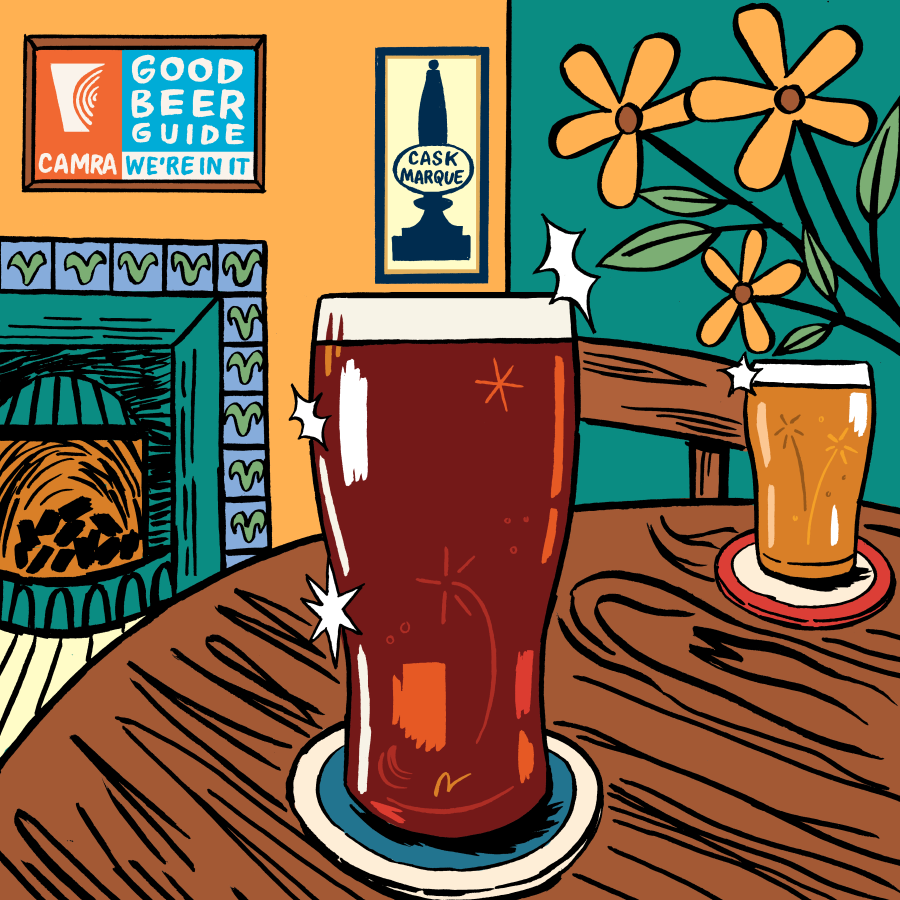
Well, despite this being an intro to cask you may have gathered that there’s a lot of care, consideration and craft required to pour a good pint of cask beer. When cask is served well it is a thing of beauty, and when it is served badly, well, it's enough to put someone off for life. Bodies such as CAMRA and Cask Marque work to provide cask accreditation for individual premises and seeing their logos in an establishment is a pretty good way to know that you, and the cask beer you’re about to order, are in safe hands.
-
How does carbonation affect those who serve cask?
Cask requires knowledge and if the bar I work in is to keep two cask lines running to quality standards then it’s vital our team know how to handle the casks when they arrive, how much time to give them before we start pouring and to make sure we pick casks that’ll move quickly so as not to be serving the beer way past its best. It’s a lot of work but when done well, it’s worth it!