Italian cask beer
Some drinkers may not fully appreciate it, yet cask beer is one of Britain’s greatest contributions to the world’s gastronomy, and as such, appreciated by beer lovers worldwide.
After all, it possesses all the qualities to merit such praise: it is utterly unique, instantly recognisable, deeply rooted in a local tradition, and, above all, undeniably delicious.
Much to the disappointment of its international fans though, one of cask beer’s most distinctive characteristics is its delicacy. It really doesn’t handle long-distance travel well, meaning that exports from the UK are relatively limited.
As a response, some passionate brewers around the world have taken it upon themselves to replicate the style locally. Admittedly, success rates vary widely, yet brewers’ efforts are always driven by genuine admiration for this uniquely British tradition.
Things you will learn

- The Italian beer revolution
- White Dog Brewery
- Hilltop Brewery
- A widespread niche
- A justifiable effort
-
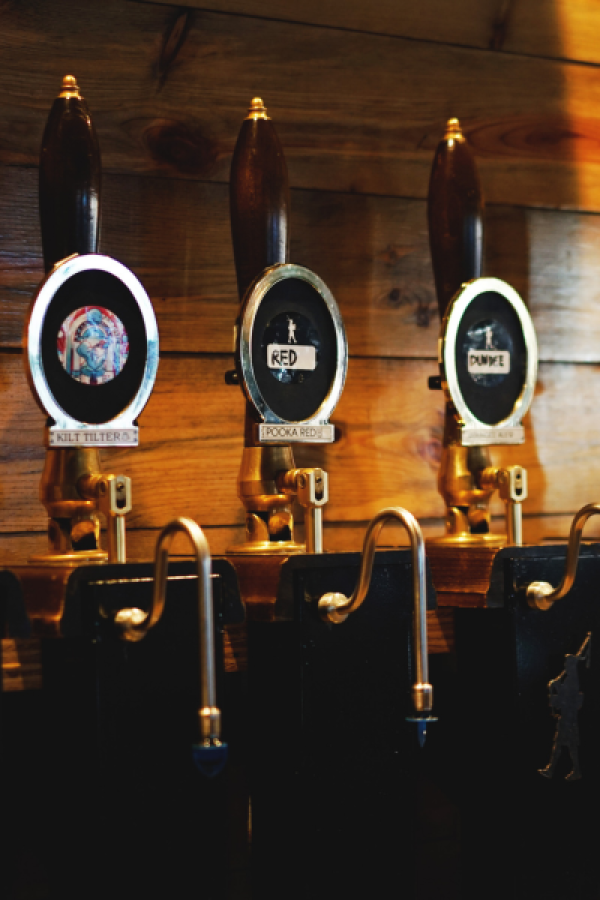
Cask can be found across the United States, especially in Western states like Washington, Oregon, Texas, and California, particularly thanks to breweries such as Machine House in Seattle and Away Days Brewing Co in Portland. One of the States's craft beer capitals, Denver, Colorado, is home to some cask beer too. North of the US border, Canada also boasts a vibrant cask ale movement. The country hosts a sizable annual festival at Bar Volo, a legendary cask-loving pub in central Toronto.
Cask beer has also found a presence in countries with little cultural or political connection to Britain. In Argentina, publican Alberto Eyherabide runs an annual cask beer festival that brings together an array of beers crafted by passionate enthusiasts from across South America. Among the more unexpected places with a devoted following for cask beer, however, Italy certainly stands out.
-
The Italian beer revolution
In the early 1990s, Italy was just kick starting its modern beer revolution, the first pioneering independent craft breweries emerging primarily in the northern regions of the country. These early brewers drew inspiration from a range of distinct traditions, with Germanic and Belgian brewing standing out as their primary influences.
For some early artisan producers like Birrificio Italiano, founded near Lake Como in 1994, following the Germanic tradition was kind of a natural progression. Northern Italy had been under the Austro-Hungarian Empire’s dominion until the mid-19th century, a historical geopolitical connection that continues to shape the beer styles considered native to the region today.
Meanwhile, the Belgian influence – evident in the approach of other pioneers like Baladin, founded in Piedmont in 1996 – stemmed from the fact that Belgian beers were among the first non-Germanic styles imported into Italy. The availability of these distinctive ales played a key role in shaping Italy’s brewing revolution, leaving a lasting impact during its formative years.
-
On the other hand, cask beer brewing was not practised in Italy initially, largely due to a lack of knowledge and the practical challenges it entailed. Despite its limited presence among the offerings of Italian brewing pioneers, however, the British brewing tradition had a significant philosophical influence on Italy’s early craft beer movement. Many Italian bottled beers, regardless of their quality, could be technically considered cask beers, in that they were unfiltered and unpasteurised. Cask beer was indeed held in high esteem, widely regarded as the pinnacle of artisan beer.
At a time when Italy's fledgling craft brewing scene was characterised by experimentation and a certain amateurishness, British cask beer brewing was perceived as a model of excellence, with its well-defined criteria and the backing of a structured advocacy group.
This admiration explains why many were eager to support it through CAMRA membership (including this author, who became a member long before permanently relocating to the UK).
-
White Dog Brewery
Cask production made its first entry into Italy on the rolling hills between Bologna and Modena – Italy’s fast cars capital – thanks to British-born Stephen Dawson. A devoted cask beer enthusiast and early CAMRA supporter, Dawson has called these hills home for the better part of his life. He fell in love with the place following a revelatory stay as a student back in the 80s: “I graduated in English and Italian literature in the UK,” he says. “I first travelled to Italy for a year of study abroad in 1980 and I have been living here since then, except for four years spent in New York, at the time I used to work in the publishing sector.”
In 2004, as Italy’s artisanal beer was approaching the end of its first revolutionary decade, Steve turned his brewing passion into reality. He bought a rustic, five-barrel, custom-made brewing kit off Brendan Moore of Norfolk’s Iceni Brewery and launched White Dog: Italy’s first “British” cask beer brewery.
In a country missing any mainstream form of quality beer culture, Dawson’s cask beer was certainly a little ahead of its time. “When we started nobody was making cask ale,” says his son George, who grew up alongside the brewery itself and got involved with the operations in 2013 – at the tender age of 17. “At the beginning, we would only package in [bottles and] casks, so if a customer wanted our beer we had to set everything up for them,” he says.
Over time, White Dog Brewery adopted a more heterogeneous approach to packaging, yet Dawson never betrayed his passion for cask. “By now we have a legal definition for artisanal beer in Italy. The brewery must be independent, production has to be under 200,000 hl, and no micro-filtration nor pasteurisation are allowed. But for us it is important we make proper real ale, so our beer also needs to be re-fermented in cask, keg, or bottle with no addition of CO2, which is instead very common [elsewhere],” he says.

-
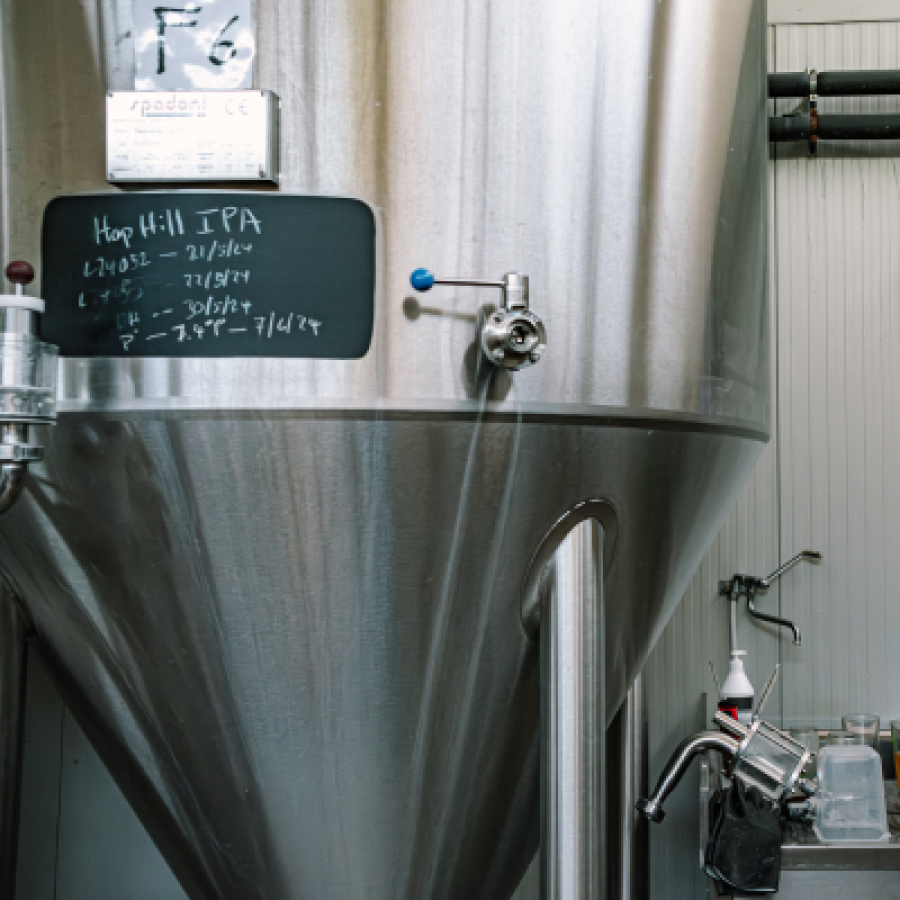
Now in its third decade of activity, White Dog’s beers are still reassuringly faithful to the original recipes. The regular line-up consists of a classic amber-coloured bitter; a bready, crisp and citrusy golden ale; a porter, a stout and a hoppy, caramelly American pale ale – a legacy of when West Coast-style IPAs were all the rage among Italian beer enthusiasts. A double IPA, a white IPA, and a session IPA joined the portfolio along the way. “Our Yellow Fever [golden ale] has always been our best-selling beer, but it is slowly being overtaken by the session IPA and the white IPA,” says George Dawson. “Today, people often choose to drink more than one beer, but they want them to be lower in alcohol… Our traditional British bitter, which has about 4% abv, is beginning to catch on now.”
White Dog brewery sells most of its production within the neighbouring provinces. In warmer weather, local supporters benefit from the unique opportunity to enjoy a pint of freshly poured beer straight from the cask in the curiously decorated beer garden or in White Dog’s cosy little brewery bar. “We’ve got our own handpump,” says George. “In the summer, we install it here at the bar whenever we are confident that we are going to go through the whole cask.”
Despite its regional focus, White Dog’s cask beer expertise means that its beer can be found in some of the country’s leading cask beer-focused bars [see below]. “Not many bars are really capable of handling cask beer properly,” admits George. “The few who are, however, know exactly what they are doing. They are really passionate and buy from us regularly.”
This small brewery, nestled in the Italian Apennines, has played an instrumental role in promoting awareness of cask beer. Building on its pioneering efforts, the brewery remains deeply committed to education, targeting both the public and the trade: “We also provide education ourselves [to the public]... and we regularly advise other breweries on cask beer too.”
-
Hilltop Brewery
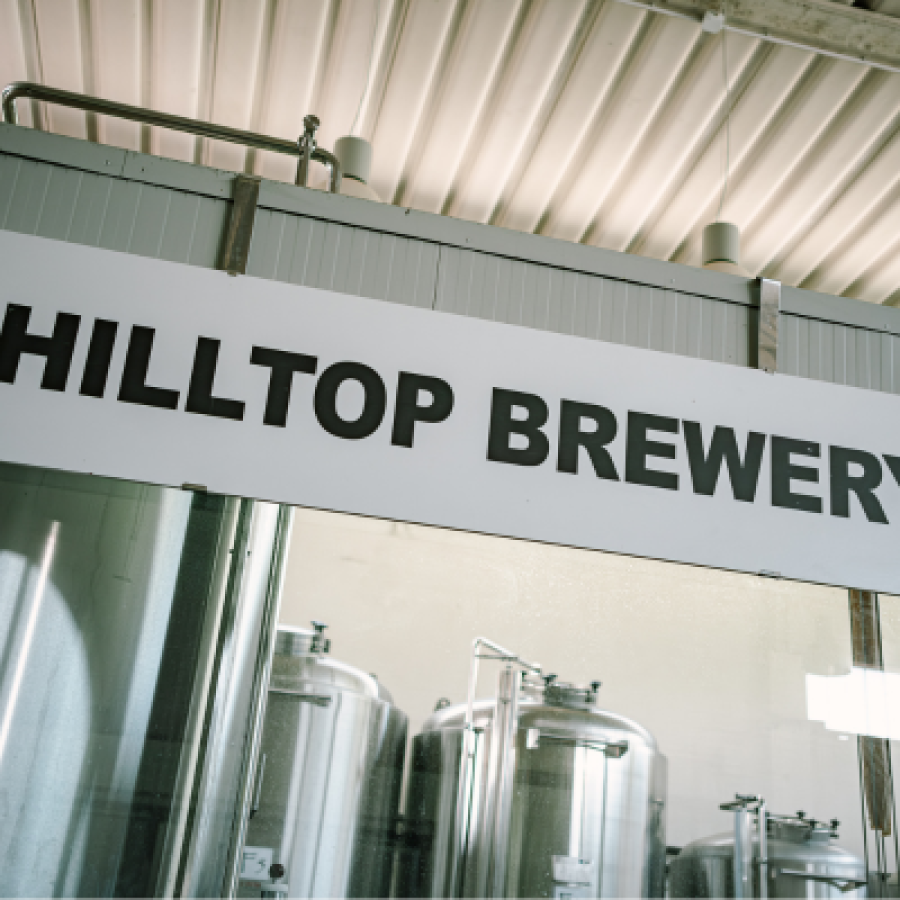
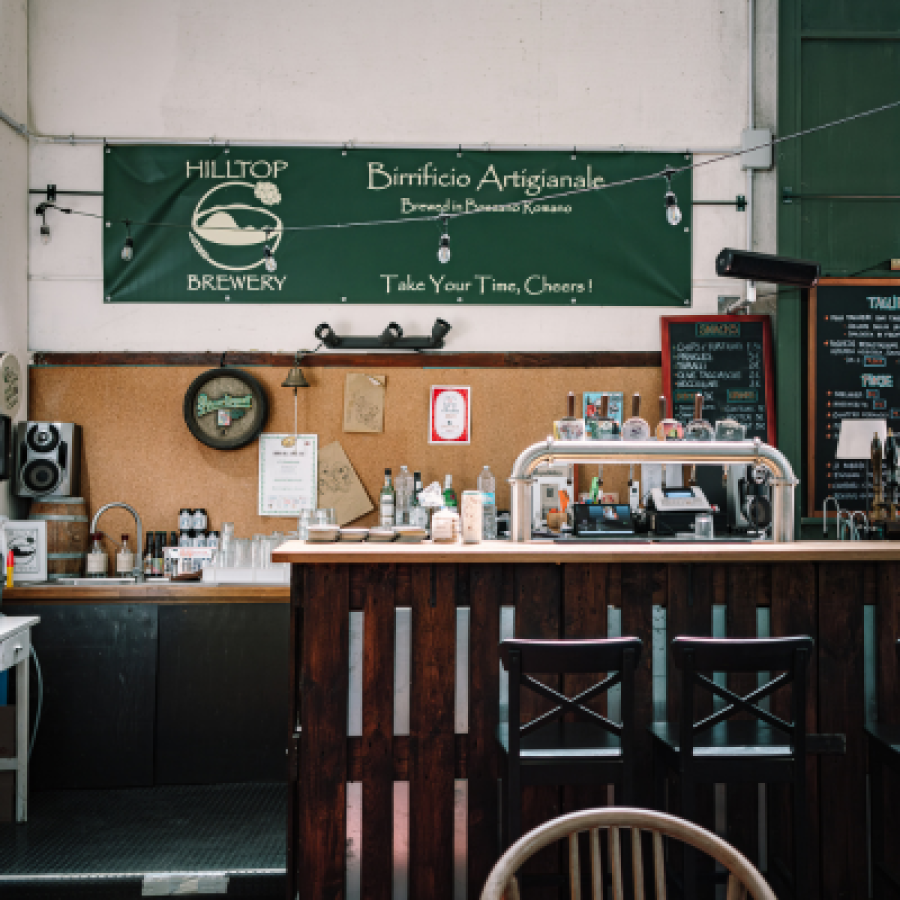
Much further south, about an hour’s drive north of Rome, is Hilltop Brewery of brewer Conor Gallagher-Deeks. He grew up in Rome in an Anglo-Irish family and developed a passion for beer during his university years in the UK. “Being there really opened my eyes,” he says. “Back in 2003, even just going to the supermarket was a completely different experience compared to Italy. The selection of beer was so much better and more varied.” Gallagher-Deeks’ first deep dive into cask beer also happened during his university years in Britain, while volunteering at CAMRA festivals. “It was the first time I saw how to serve cask by gravity rather than by hand pump,” he says.
Once back in Italy, Gallagher-Deeks learned about his father’s early attempts at homebrewing and decided to give it a try himself. He then honed his professional brewing skills at Birra del Borgo, once one of Italy’s leading artisan breweries (so successful that it eventually caught the attention of brewing giant InBev for acquisition). There, Gallagher-Deeks filled his first casks, which the brewery would regularly send to the Italian bar at the Great British Beer Festival. To refine his expertise in cask beer making, he also spent time at White Dog: “I slept in a tent in their garden. My goal was to learn a lot more about how to use the cask,” he says.
-
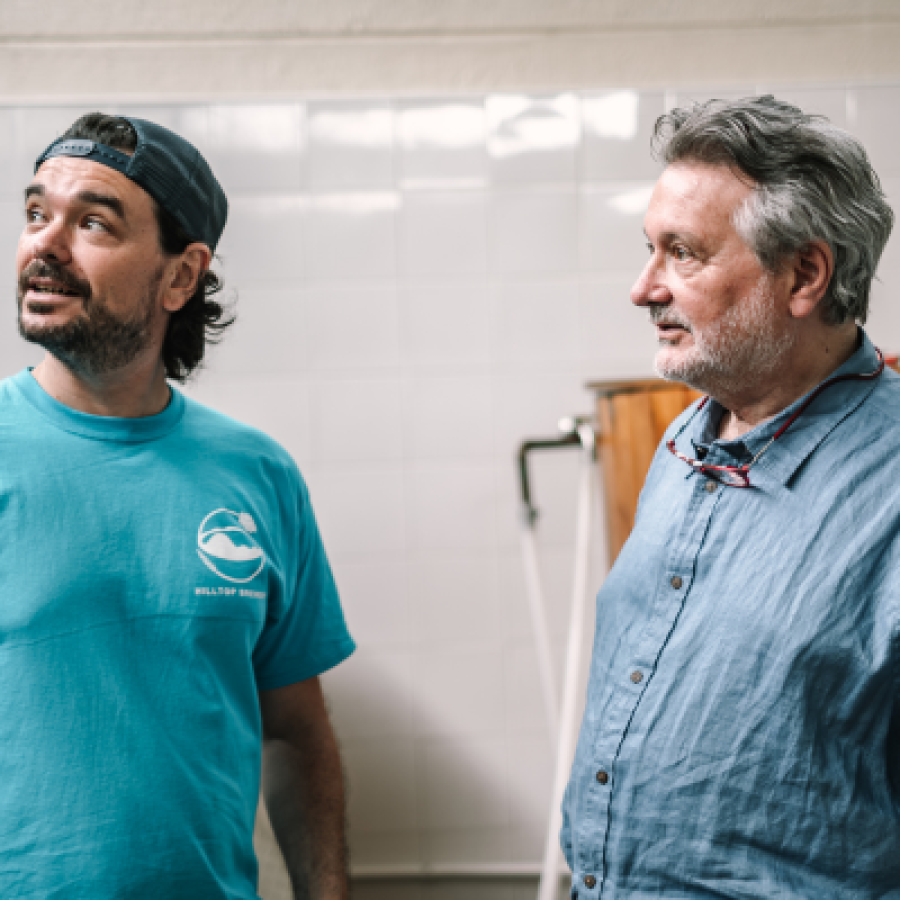
After his stint at Birra del Borgo, Gallagher-Deeks and his father purchased a brewing kit in Manchester and launched their own brewery, naming it “Hilltop” after their home perched on a hill overlooking Lake Bracciano. “When I went to Manchester, I had a pin made just for us with our logo, and I filled it with the IPA I brewed as a homebrewer. It was my very first cask,” he recalls proudly. “When I flew back, they almost arrested me because they thought I had a bomb in my suitcase.”
Since that first brew, Hilltop Brewery has focused on traditional British and Irish styles, from Irish stouts to milds, with more styles joining along the way, including Belgian ales, pilsners, and, of course, plenty of IPAs.
Over the years, Gallagher-Deeks has even brought some of his casks to the UK for the Pig’s Ear Festival. “It was the first time my cousins got to taste my beer – it was such an exciting experience.” The brewery has remained dedicated to cask beers, which are destined mainly for: events, Hilltop’s own taproom, and a select group of trusted pubs across the country.
-
A widespread niche
Not far from Hilltop is Shire Brewing, a young name in the Italian brewing scene that places a strong emphasis on cask production. Its flagship styles include a golden ale, an oyster stout, a bitter, a mild, and even a scotch ale. The full lineup, though, is quite eclectic, also featuring Czech and German-inspired beers.
In addition to breweries with a specific focus on British styles like White Dog, Hilltop, and Shire, many other producers also embrace – more or less regularly – cask beer production.
Young brewery Linfa, also located near Rome, is another example. While it does not specialise in British beers, it regularly puts its oatmeal coffee stout, Yuma, into cask.
“I love British real ales, and as a beer drinker, they are the ones I always gravitate towards,” says brewer Andrea Nardi. “Over the years, I’ve had the chance to taste some of the best English producers, from those who focus solely on cask to others like Five Points, who’ve reimagined some styles with a modern twist. I’ve also participated in several festivals there, including the GBBF a couple of times, as well as London Craft and IndieMan in Manchester.”
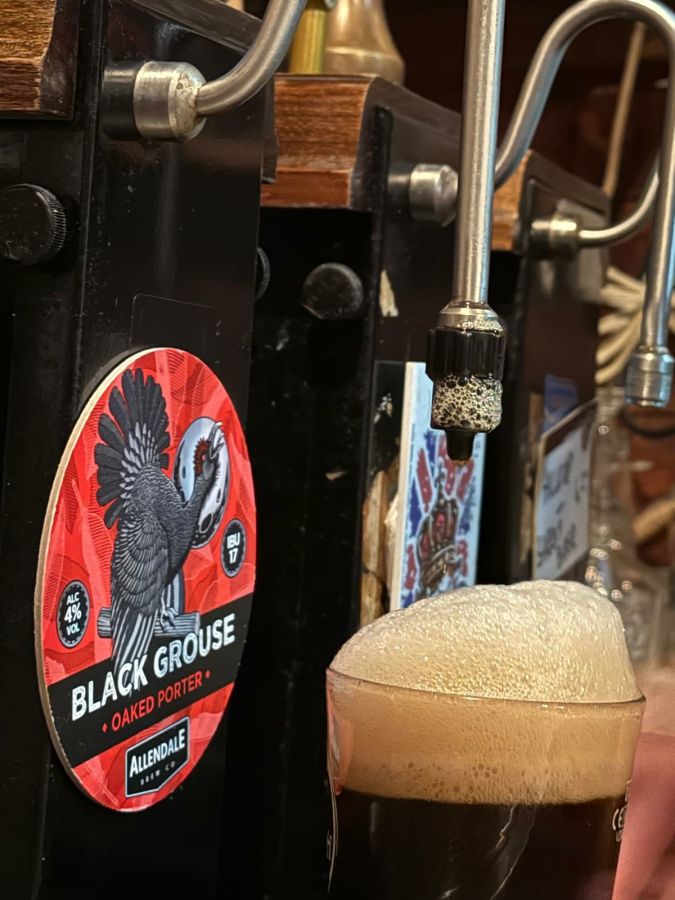
Cask beers are also embraced by artisan breweries of international renown. Brewfist, for example, quickly became one of Italy’s leading craft breweries after it was founded in Lombardy in 2010. While heavily shaped by the first major wave of American craft beer influence, Brewfist regularly puts some of its beers into cask for specialist pubs and for its own taprooms. “We started doing cask consistently about five or six years ago,” says founder and head brewer Pietro di Pilato, who credits his familiarity with cask to a work experience at Fullers. “It’s only about 1% of our total production, but still… we regularly put at least a couple of our beers in pins.”
For Italian breweries like Brewfist, producing cask beer is a delicate and expensive endeavour. Yet, Pilato points out that, alongside his personal attachment to cask, people recognise the added value of such a unique product. This, combined with the passion behind it, makes the effort entirely worthwhile.
-
A justifiable effort
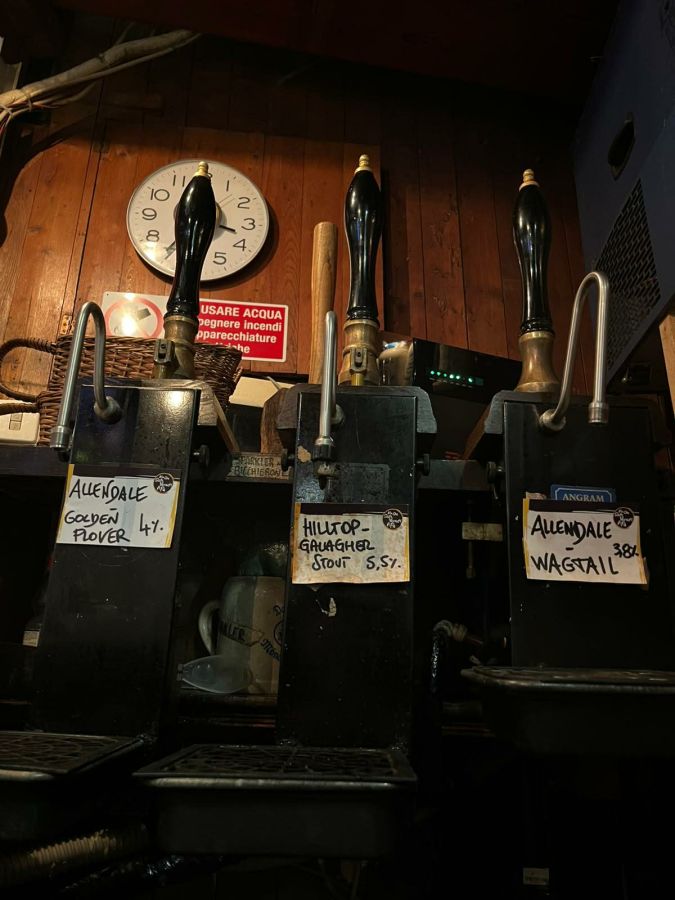
One of the biggest challenges Italian brewers face when considering cask beer production is the overall lack of pubs and publicans knowledgeable enough to handle it, which discourages some from producing more. The pub is a key ingredient in a thriving cask beer industry after all. Despite this, Italy boasts a number of well-known bars and pubs that have earned a reputation for handling casks correctly. The most popular venue is certainly Rome’s Treefolk Public House, which offers over ten cask beer options, with the selection sourced from both the UK and Italy. The pub serves as a crucial hub for educating the Italian public about the style, not only because of its wide selection, but also through the annual cask-focused Londinium festival.
Other notable venues include The Drunken Duck near Vicenza (Veneto), The Wellington in Lodi (Lombardy), The Mulligan’s Irish Pub & Whisky Bar in Milan, other Roman institutions like Luppolo Station and Ma Che Siete Venuti A Fà, as well as the legendary Goblin Pub near Modena and Arrogant Pub near Reggio Emilia (Emilia-Romagna).
Further challenges for Italian cask production stem from a significant – albeit perhaps justified – lack of education, with many drinkers still unfamiliar with the traditional room temperature and low carbonation of the drink. “It is well received by enthusiasts,” explains Pilato, “those who are used to it rarely refuse it. That said, cask ale is something you have to explain well, otherwise, you risk losing that drinker forever. You also need to make compromises. You can’t just serve it at 13°-14°C, especially in summer when it’s 35°C outside, so most pubs serve it a bit cooler.”
-
In addition to the lack of widespread understanding of the serving method, British beer styles remain relatively niche, especially when compared to German lagers, weizens, or Belgian ales, which have a much longer and broader historical presence in Italy. “Beers like brown ales, milds, and bitters can be very difficult to sell here,” explains Linfa Brewery’s Nardi. “I think it’s a cultural issue. The only international beers people could find in the '90s were Guinness, Belgians, and lagers, so that’s what the public is more familiar with.”
Additionally, there are practical challenges related to the scarcity of specific equipment, too. “Honestly, making cask ale here is a big hassle,” Pilato explains. “For instance, we don’t have a cask washer, so we have to clean them all manually. Also, finding pins is not easy.”
Despite the numerous challenges Italian brewers face, cask beer continues to attract interest from brewers, publicans, and drinkers alike. It is widely regarded as an integral part of the Italian artisan beer scene as a result, a testament to the respect it commands within the country’s ever-growing community of beer enthusiasts.