Heritage Brewing: Hook Norton
Series: Heritage BrewingIn the introduction to heritage brewing, we considered how brewers make use of historic recipes, traditional methods and heritage ingredients to make their beer. Now we focus on a case study – the rare story of an independent brewery that has survived for nearly two centuries. Enduring businesses like these take pride in their roots, but by being adaptable they remain relevant in the contemporary brewing landscape.
Things you will learn

- Inside the tower: Hook Norton, Oxfordshire
- The Hook Norton family
- The beer
- Recipe for success
- Hold your horses – beer and tourism
-
Inside the tower: Hook Norton, Oxfordshire
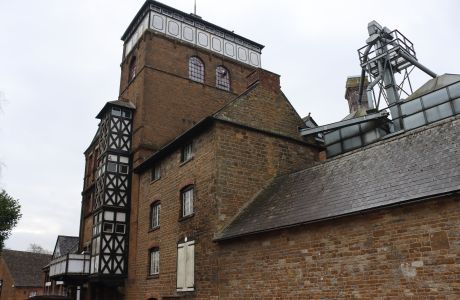
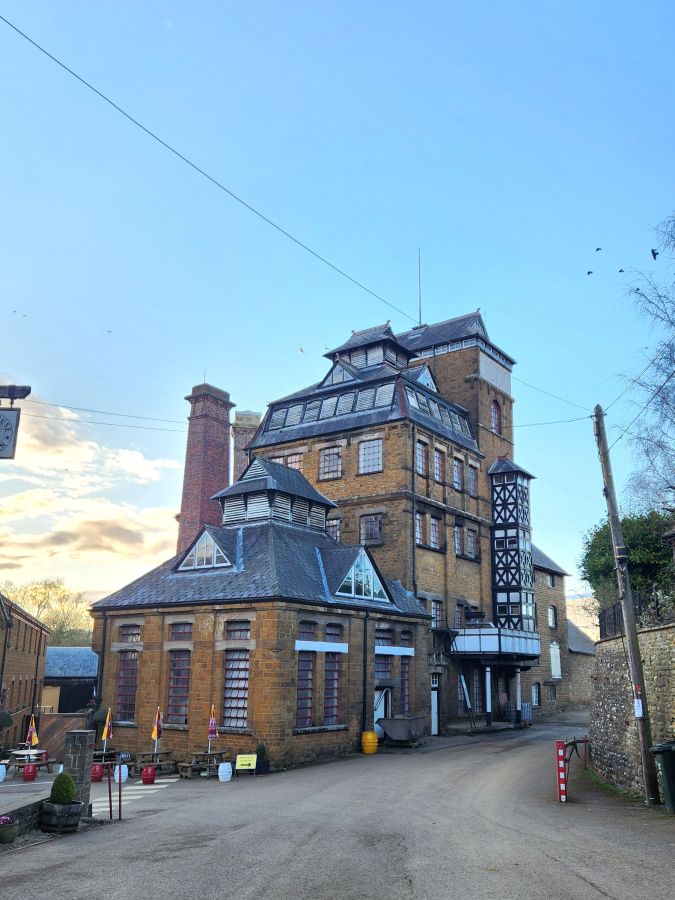
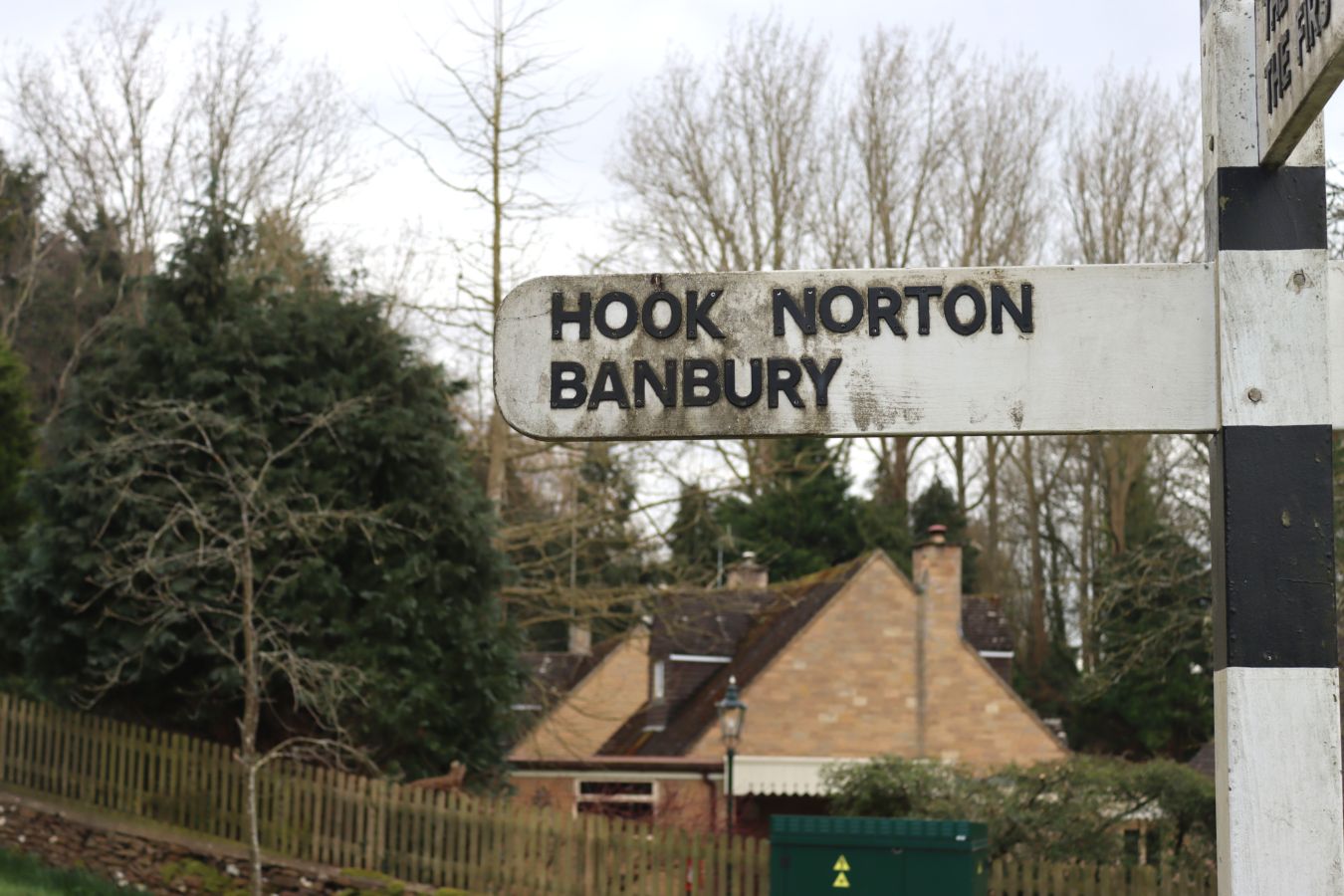
Few breweries make a first impression like the Hook Norton Brewery in Oxfordshire. As you walk up the narrow but gentle curve of Brewery Lane leading out of the village of Hook Norton, the imposing yet beautiful six storey Victorian tower brewery comes into view. It feels almost incongruous with the rest of the picturesque rural village that it borders, yet is undeniably a hugely important part of it.
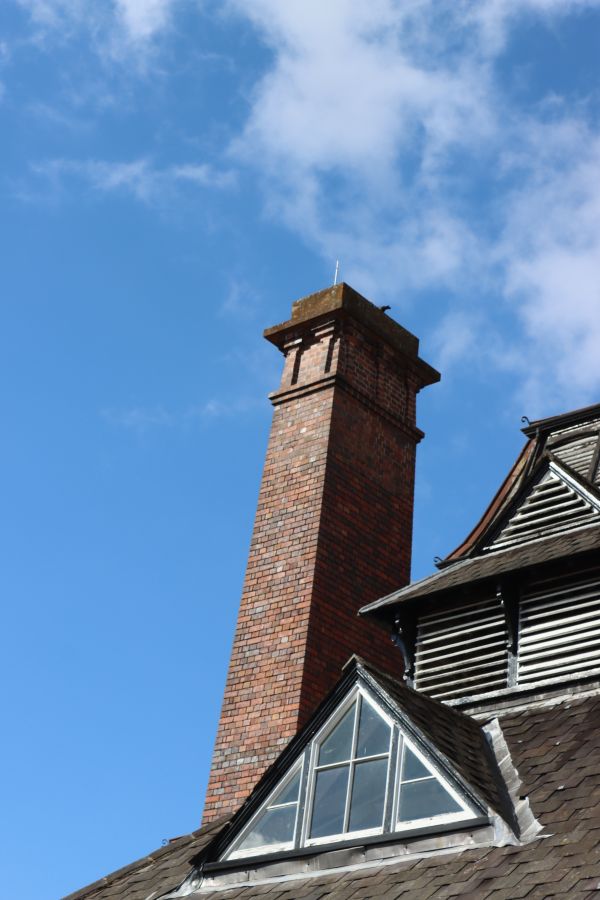
The brewery was designed in 1899 by William Bradford, a specialist in brewery architectural planning. He is said to have had the distinctive style of Chinese pagodas in mind when he added the peaked roofs and triangular dormer windows to the plans. But Hook Norton is not just an aesthetic delight. It is a rare survival of an extremely pragmatic way of designing a brewery.
In the tower system, brewing is organised as a vertical process, with the first stage – mashing in – happening at the top and the last – racking – happening at the bottom. This structure means that gravity does the work in moving the liquids between the different stages.
-
But Hook Norton did not spring to life, fully formed, in 1899. Its story had already been unfolding for a generation by the time Bradford’s building came to be. The business was founded by maltster John Harris in 1849 when he moved into the village, purchasing a 52 acre farm with a malthouse. As well as malting, Harris began dealing in hops before turning his hand to commercial brewing in November 1856. Turns out he was pretty good at it and in 1859 he bought a small beerhouse in the village where his beers were offered for sale. A decade later, he purchased The Pear Tree at the end of Brewery Lane – the first Hook Norton Brewery pub in a tied estate that now stretches to 32 venues.
The extension of the Chipping Norton railway line bolstered business even more in the 1880s, as Hook Norton catered to the thirsty navvies doing the heavy work on the lines. After Harris’ death in 1887, the business came under the care of his nephew, Alban Clarke. He expanded the brewery in 1894, building a stable block and then constructing the tower building on the site of the original brewhouse in 1899-1900. The stone was quarried less than three miles away from the village.
The tower build cost over £19,000 - the equivalent of nearly £2m today – at a time when the business employed around fifty people, many of them from the village. This was to be the biggest workforce they would ever have.
Hook Norton Brewery has a long and interesting history that is artfully detailed by Adrian Tierney-Jones in his 2024 book Playing Hooky – A History Of Hook Norton Brewery. For our purposes, suffice it to say that more than 175 years on, Hook Norton remains a vibrant and dynamic brewery. It is still owned and operated by the Clarkes, along with the Gilchrist family who were able to acquire a stake in the 1950s.
-
The Hook Norton family
James Clarke is the fifth generation managing director of Hook Norton. He started working in production there in 1991 before being appointed Head Brewer in 1998. James took the reins of the business in September 2004, aged 33, after the death of his father.
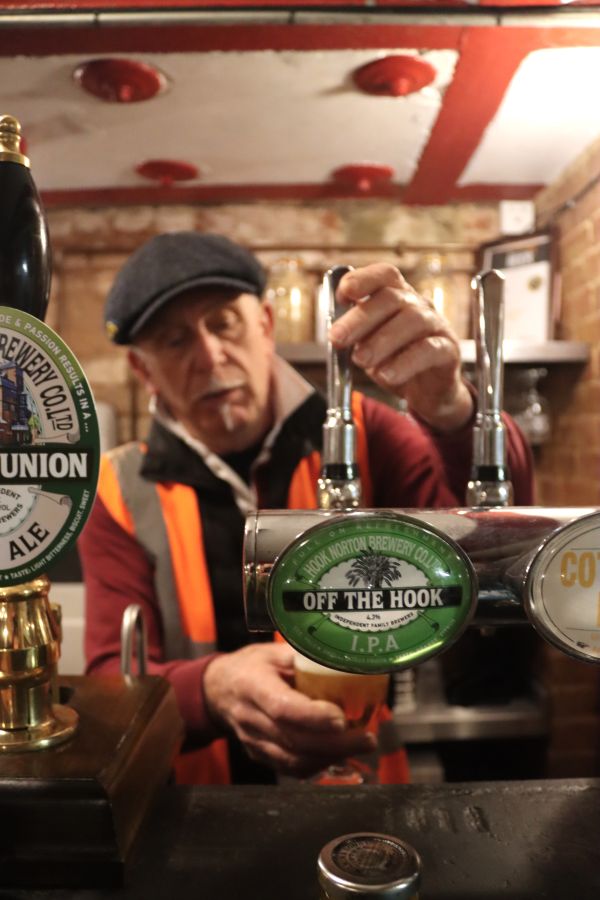
He is a confident, friendly man and if you spend any time at all at the brewery, you’ll see the great value James places in his team and the trust he has in their skills and expertise. It may sound cliche, but at Hook Norton it feels like all of the staff are part of the family – not just James’s two sons, George and Ed, who work in production.
Hanging around the brewery and its village pubs, you also get a sense of how significant it is to the local community. Not just as an employer, but also as a hub for the social and cultural life of Hook Norton itself.
-
The village has been shaped by the brewery to some extent, but also, it feels, protected by it. There is a feeling of quaint antiquity in the air amongst the bewildering number of listed cottages and one feels that the steadying presence of the maltsters-turned-brewers over six generations must have played a part in keeping newer, and perhaps more rapacious, businesses out that could have changed the character of the area and the gentle cadence of village life.
The brewery is not so big that it feels impersonal. People in the area know the team and the place. They feel a connection to it. Everyone you meet speaks about Hooky with great affection. Perhaps this is one of the keys to its enduring strength – as well, of course, as making great beer.
-
The beer
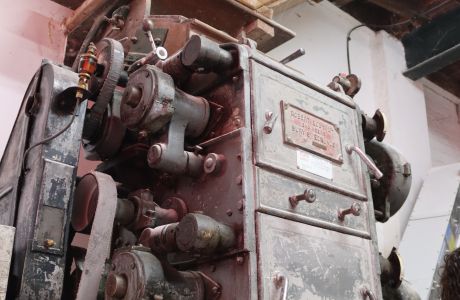
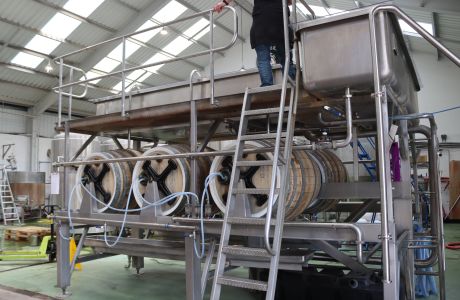
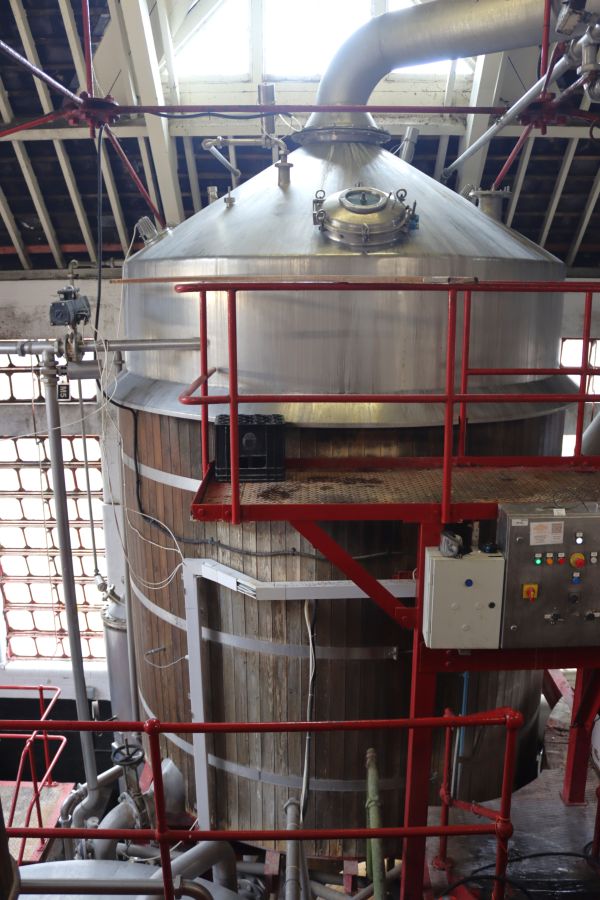
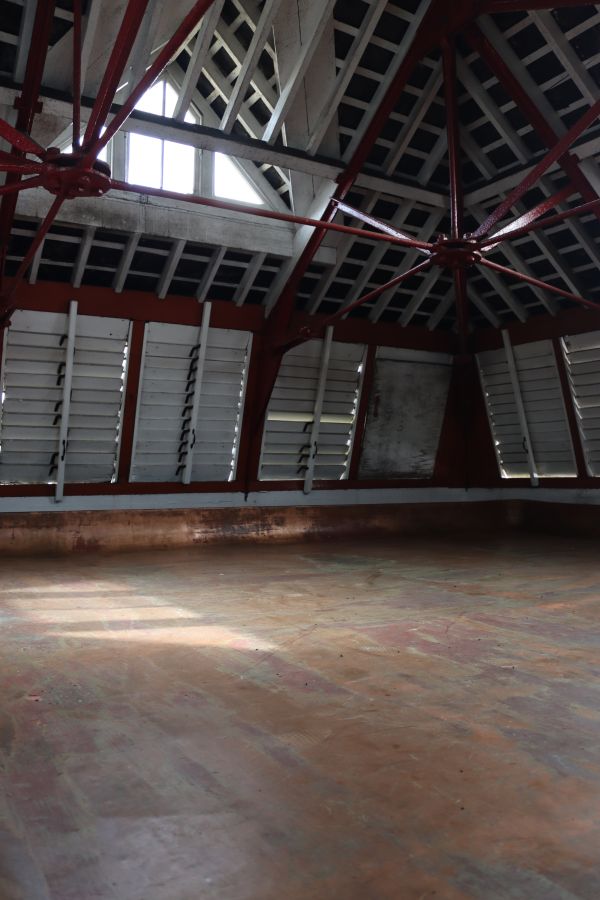
The operational tower brewery is testament to the old adage, if it ain’t broke, don’t fix it. Brewing continues much the way it has for generations at Hook Norton, but with a clear and definite nod to the improved efficiency and quality that modern techniques offer. On the fourth floor, the original Nalder & Nalder grist mill takes up an entire room. Next door, a row of (relatively) modern heat exchangers stand on a Victorian tiled floor.
This is not progress for progress’ sake, but a drive to make the brewery as sustainable as possible, without losing touch with its heritage. An important part of that is environmental sustainability; a key part of making any brewery fit for the future as well as driving savings.
“We think about how we can utilise the tower brewery and still bring in these new efficiencies,” Brewery Supervisor Andy Thomas tells me. “How do we still have the history there, but also become more sustainable?”
It feels like my visit to the brewery has come at a time of relatively rapid change. There are plans to install a new boiler as well as to position low level solar panels in the neighbouring fields. The aspiration is for the brewery to become more than 50% powered by sustainable energy.
-
Just a couple of weeks before I arrived, a new electric pulley system to haul up the grain had been installed on the fifth floor to lower electricity costs.
“We had a great big motor before,” Andy explains. “It used to shake the building.” And the new pulley doesn’t just generate a saving. This new addition to the unique mechanics of the brewery shows how Hooky is actively seeking to make the visitor experience more enjoyable. Keeping the noise down when the brewery is active makes the site more accessible for people visiting on tours.
Interestingly, the practice at Hook Norton is to leave old brewing kit in situ when it is superseded by something more efficient. On one landing, a huge, ancient and broken cog from the mash tun rests. Its working life is over and now it is a part of the visitor experience. The new electric pulley may be in general use, but the old system has not been removed.
“We’ve left all the old line shaft working, so we are going to connect it back up to the steam engine,” says Managing Director, James. “And when we run the steam engine, we’ll run the line shaft off of it. At the moment we tend to run the steam engine once a month. We need to be running once a week. But when we’ve got the new boiler in, we’ll put that plan in place.”
The team, it seems, are always looking for the best way to make Hook Norton beers to the high standard they have always kept, without letting their methodology become stale.
“We’ve condensed some of the operations, purely for efficiency,” James continues. “The new boiler will mean we rearrange some of the fluid flows and so on. We’re quite lucky in that the brewery building is much bigger than it ever needed to be for the amount of beer we made.”
This explains how Hook Norton can be a working brewery and an engaging visitor experience all at the same time.
-
Recipe for success
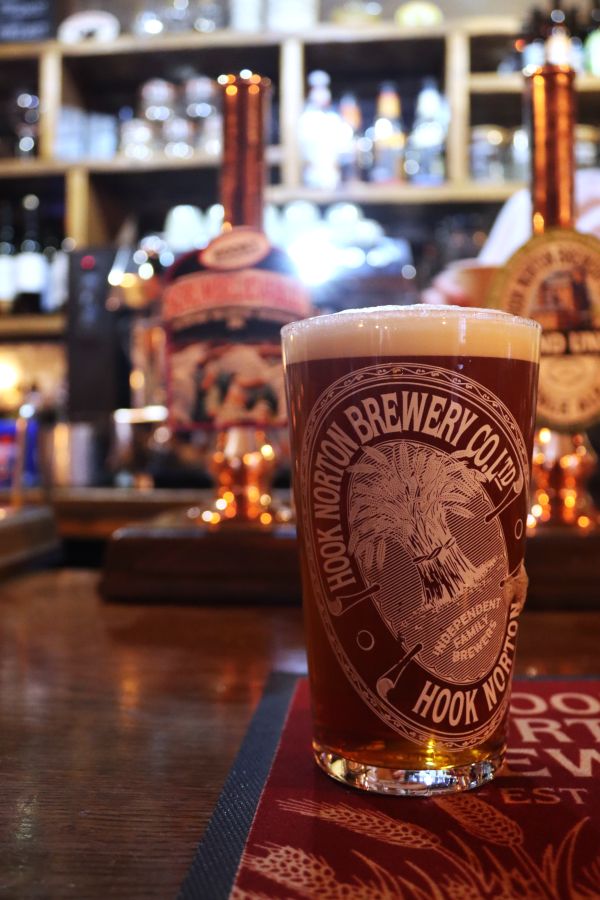
Being part of a continuous brewing tradition over six generations gives access to some wonderfully historic recipes. Perhaps the best known is their best bitter, Old Hooky, which was first brewed in 1977 in celebration of Queen Elizabeth II’s Silver Jubilee. It may feel like a sub-50 year old recipe isn’t actually that old, but in truth, many of the longest serving beers on our bars today are lucky to make it to such a venerable age without being superseded and forgotten.
The Hook Norton Double Stout has origins rooted deep in British history. It was launched in 1996 as a revival of a beer that was discontinued during World War One. At that time, the shortage of black malt had made this particular beer impractical to brew. The First World War was also the reason that the maltings closed, due to the shortage of coke available to stoke the kilns.
A more recent creation is Merula Stout. The dark beer is named for the blackbird (which is, rather unfortunately, given the Latin name Turdus merula. You can see why they opted to adopt only the latter part.). Its brew sheet is based on a recipe from 1899, stretching right back to the construction of the tower brewery.
-
Merula is available on keg, which no doubt gives it quite a different texture and drinking experience than the original recipe. This is unusual for Hook Norton, who are still a predominantly cask-focused brewery. However, Merula looks set to be given an additional modern twist soon as the brewery is investing in a nitrogen generator. Primarily this will reduce the carbon dioxide use on site, but equally it will allow Merula to be served on nitrogen – an eminently modern (or at least post-50s) approach to serving a classic heritage recipe.
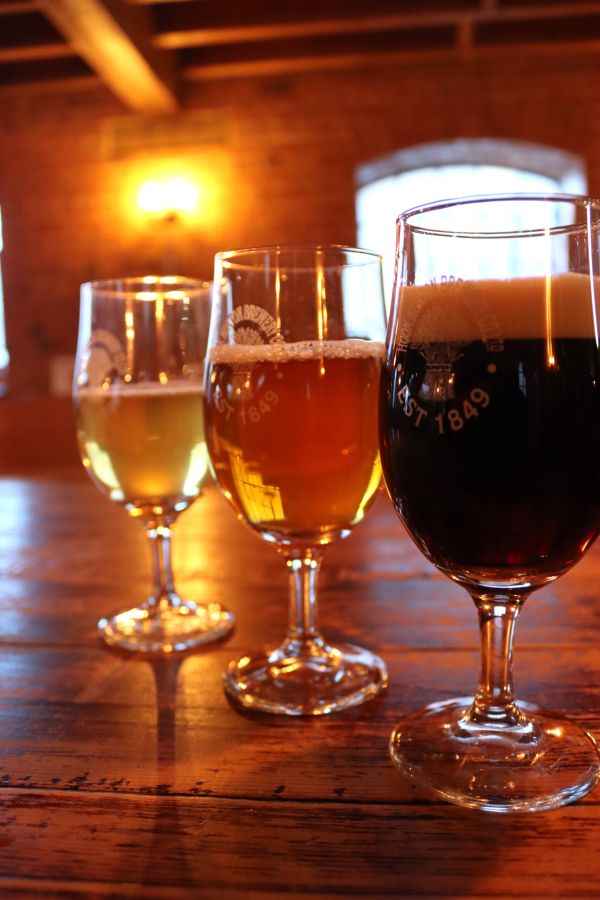
But again, it must be emphasised that while Hook Norton has its core range of much-loved and time-honoured beers, there is really no restriction on the brewery team if they want to stretch their wings and try something new. Each month, there is an open tap tasting where guests can come along and try the latest beers for free. One of those on offer during my visit was Spring Light, a hazy light ale created by sixth generation brewer Ed Clarke on the Hook Norton test kit, which was installed in 2014.
This easy drinking 3.2% beer was floral with a heady hit of lime on the finish and it was a monster hit with Ed’s suggested pairing of moules frites in the onsite Malthouse restaurant. It is one of a rolling series of small batch brews crafted by Hook Norton’s team. The beers are made available on limited cask release in the local distribution area. Some have a traditional feel, while others are a little more experimental, like Ed’s zesty effort.
-
Hold your horses – beer and tourism
One of the things I found most interesting when talking to James Clarke was how he often talks about changes the brewery has gone through by describing what “we” have done over the years. Often he is referring to the actions of his predecessors a century or more in the past.
“Ultimately, this is the building I grew up with.” James says. “We were the smaller brewery of four in Oxfordshire. The others sewed up south of Woodstock. We didn’t do any business really south of there. But they were all squeezed by the real estate prices whereas we’re in a rural site. Our lane might be narrow but that’s actually a strength. When we stopped using these buildings as maltings, they basically laid empty.”
It’s another case of Hook Norton benefitting from the first generations buying up more space than they really needed. This may well be another factor that has helped the brewery to adapt and thrive for so long.
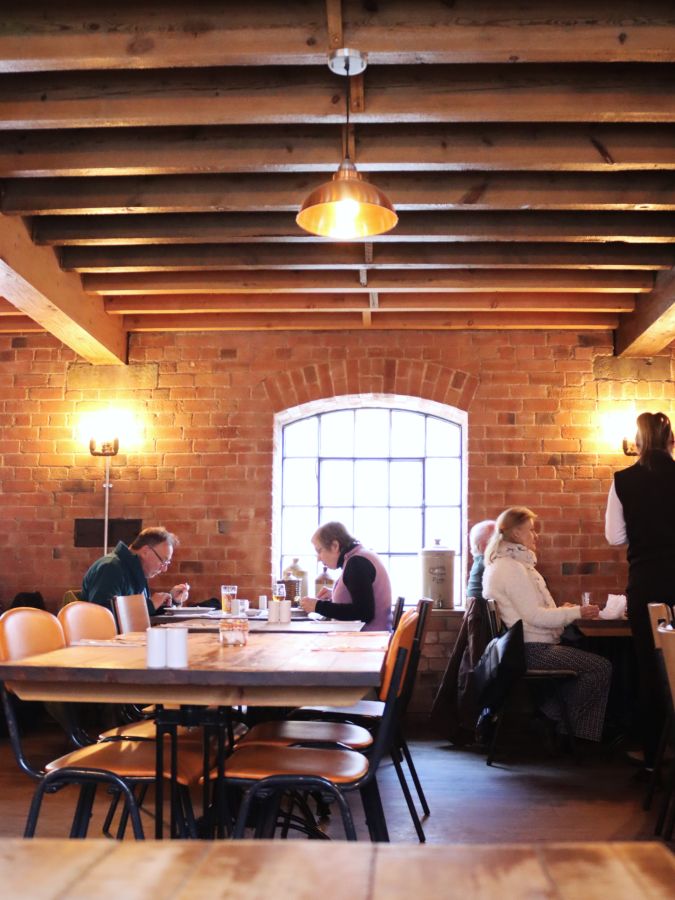
The conversion of the old maltings into a restaurant and shop in 2017 followed hot on the heels of the creation of a cellar bar under the brewery in 2015 which caters for tastings as well as acting as a private hire space. Gradually, the site has become more streamlined for tourists – a critical act of diversifying income.
-
Cashing in on the capital of their legacy is to be lauded. Making the heritage assets pay provides assurance and protection for the historic site into the future. One key stem of the tourism agenda is the team of Hook Norton dray horses.
Four UK breweries still have their own horses. Only Hook Norton and Samuel Smith’s, in Tadcaster, still use theirs to deliver beer. Lancashire’s Thwaites and Robinsons in Stockport only keep horses to show and for promotional purposes, although Robinsons also run a vital breeding programme that is helping to stem the dwindling numbers of Shire horses nationally.
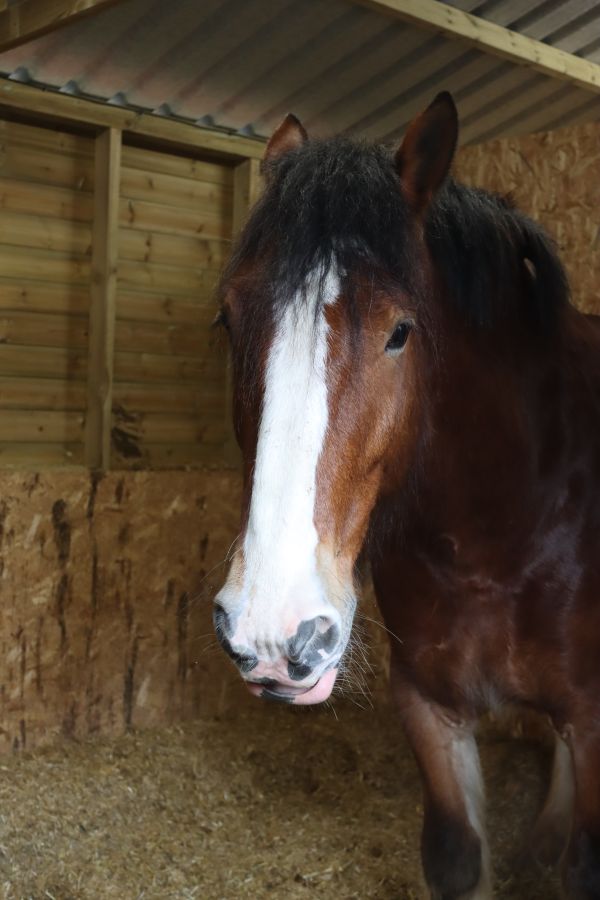
At Hooky, the dray horses' role has shifted in focus over time. They were once a key cog in the brewery machine; getting the beer out to the pubs. First the trains and then motorised transportation have since superseded the critical nature of this role, although the currently young pair of horses, Cromwell and Balmoral, will start to making local deliveries when they have matured sufficiently to undertake the job. But for now, they are a wonderful attraction for encouraging visitors to the Oxfordshire site.
Nicholas Carter has been the Head Coachman at the brewery for four years.
“They belong here,” Nicholas tells me. “I liken it to the ravens at the Tower of London. It’d be a sad day if ever there was a Hooky without the horses. They reach people in ways that no marketing can do. It’s one thing that makes us truly unique.”
They also help to get the Hook Norton name out more widely, participating in heavy horse shows around the country.
-
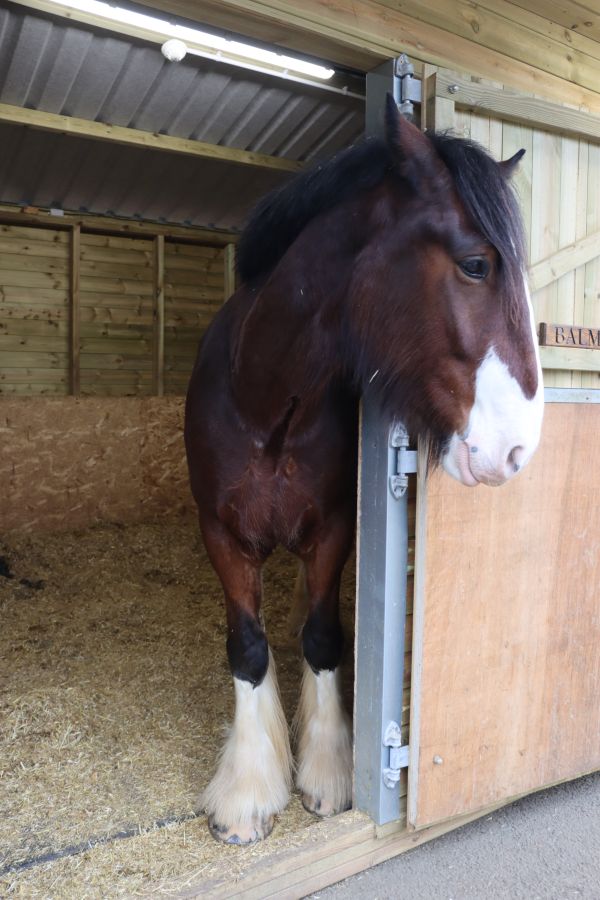
“We’ve been away competing recently and the public have travelled to Stafford from Hooky and the local area to see us. The horses have got a really big online following. As well as the shows we take them indoors. I’ve had them in the shop, in the restaurant here and the reaction is just phenomenal. People never tire of seeing these horses and a lot of the villagers treat them as their own.”
A number of disasters could have spelled the end for horses at Hook Norton in recent years. First, they lost their mature team in short succession. The venerable Clydesdale, Commander, passed away after a short illness in 2022. Just a year later, the much loved Lady Grey also died after the heart condition she had had from birth unexpectedly caused her health to deteriorate.
While a new team of young horses was being established to take their place, a blaze in the roof of the Grade II listed stable block in May 2024 caused major damage which is still under repair a year later.
“The fire would have been the perfect opportunity to pull the plug,” Nicholas points out. “But there was no sign of that. The support we’ve had from management and the board of directors has been phenomenal. There’s already been talk of buying another horse, but I’m going to hold up until we’re back into the older building. That will put us up to four and means I can run two pairs at a time or I can drive a team. We’re looking at some new carriages too. So the horses are very much a part of the brewery and will be for years to come.”
Nicholas also tells me that James has recently taken up riding and has actually been riding one of the Hooky horses, which was “a nerve-wracking time” for him, but he assures me James does “exceptionally well.”
With a managing director who is so personally invested in all aspects of the business, it's easy to see why the Hook Norton story is still going strong after all these years.